

- Author North Australian Indigenous Land and Sea Management Alliance Ltd
- Publish date 22 November 2020
- Type Report
- ISBN 978-1-922437-16-7
- Documents
- First Nations led business development
Summary
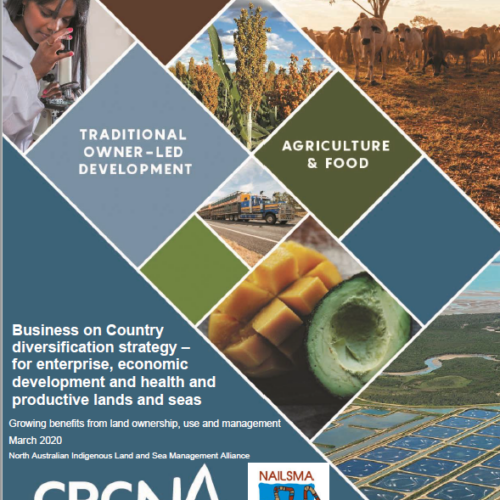
This ‘Business on Country Diversification Strategy’ sets out the principles, improved practices and actions needed from Indigenous landowners, industry, government and relevant NGOs to close the land development gap. In particular, it sets out how Indigenous interests can structure their interactions with industry and government to facilitate joint examination of sustainable land use and commercial options that improve net well-being, to establish productive pathways to realisation, and foster necessary complementary actions from government and industry.
Key principles and practice for Business on Country, derived from a comprehensive review of policies and programs that have worked well, especially the federal government’s critical Working on Country program, include:
- Strengthening the strategic leadership shown by local people
- Establishment or strengthening of local governance systems
- Accessing support arrangements for genuine real landholder engagement
- The genuine application of traditional knowledge
- Effective support from Indigenous organisations, including properly-resourced land councils and native title bodies
- Commitment to facilitated technical support from relevant arms of government and industry
- Full consideration of cultural values through activities like cultural mapping
- Further securing Indigenous land and sea country under self-management
This document should be read in conjunction with the Business on Country introduction and summary report.
Projects


Business on Country: Land use diversification on the Indigenous estate
The Business on Country project developed a new framework for Indigenous-led economic development across northern Australia. Led by the North Australian Indigenous Land and Sea Management Alliance (NAILSMA) with support from CRCNA and project partners, the project recognised that while Indigenous people hold rights and interests across a significant proportion of northern Australia, many Traditional Owner groups have lacked access to the information, planning support and investment pathways needed to translate land ownership into long-term economic opportunity. The project examined the condition, opportunities and constraints of the Indigenous estate and worked with Indigenous landowners to identify development options that could strengthen livelihoods while protecting cultural values and responsibilities to Country. It developed the Business on Country Diversification Strategy, a practical framework for Indigenous-led land use planning, enterprise development and investment attraction. The strategy emphasises Traditional Owner leadership, strong governance, cultural mapping, evidence-based decision-making and genuine partnerships with government and industry. Through pilot activities in northern Australia, the project tested approaches to Indigenous land use planning and prospectus development, helping communities assess opportunities across sectors such as tourism, land management, carbon and environmental services, horticulture, pastoralism, bush products and other emerging enterprises. The project also produced foundational resources, including the State of the Indigenous Estate report and the Business on Country Diversification Strategy, which continue to inform Indigenous economic development initiatives and investment planning across northern Australia. The project helped establish a stronger evidence base for Indigenous-led development, demonstrating how economic opportunities can be pursued in ways that support healthy Country, cultural continuity and long-term community wellbeing.